|
Brachionus urceolaris
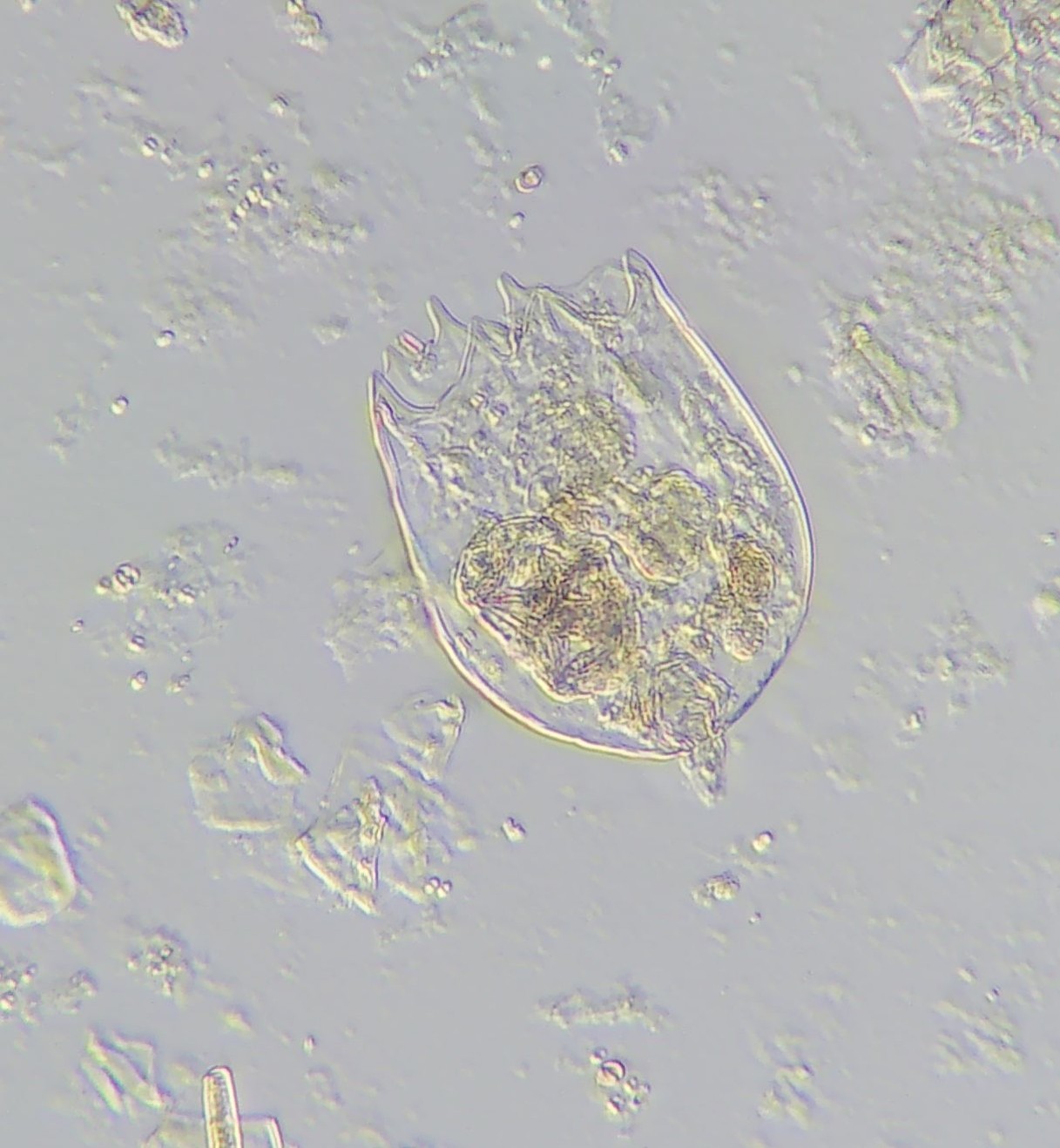
Brachionus urceolaris: Brachionus urceolaris is a widespread freshwater rotifer found in the littoral zones of ponds and lakes, often associated with macrophytes and algae, and can tolerate a broad range of pH (6-8). It is a generalist suspension feeder and reproduces via parthenogenesis, a form of asexual reproduction where embryos develop from unfertilized eggs.
Characteristics
- Morphology: This rotifer has a characteristic urn-shaped shell (lorica) that is somewhat granulated.
- Size: The lorica length typically ranges between 168-228 um, while width ranges from 105-154 um.
- Distinguishing Features: It is recognized by having a gentle curve between antero-median and antero-intermediate spines and lacking posterior spines.
- Habitat: It is found in freshwater habitats.
Habitat and Ecology
- Environment: Typically inhabits freshwater, though also found in inland saline waters.
- Littoral Zone: Prefers sheltered littoral microhabitats, including among Eichhornia (water hyacinth) roots, aquatic plants (Myriophyllum, Potamogeton), and on mud surfaces.
- Distribution: Occurs in both littoral and open water (pelagic) zones, often associated with filamentous green algae.
- Environmental Tolerances: While it tolerates a broad pH range (5–10), its optimal growth occurs between pH (6-8). It has been associated with higher temperatures, particularly in summer months.
Population Dynamics and Behaviour
- Reproduction: Reproduces parthenogenetically, allowing for rapid colonization of suitable habitats.
- Predator Resistance: B. urceolaris exhibits an effective defence against predation. Its eggs can survive being eaten and remain viable after passing through the predator's digestive system, a strategy that helps maintain population density.
- Movement: The foot is long, transversely wrinkled, and retractile, allowing for both movement and attachment to substrates.
Position in Ecosystem
- Role: Acts as a consumer of bacteria and phytoplankton, forming a critical link in the aquatic food web.
- Generalist: It acts as a generalist species in aquatic systems, often found alongside other planktonic species, in warmer, alkaline conditions.
|


